
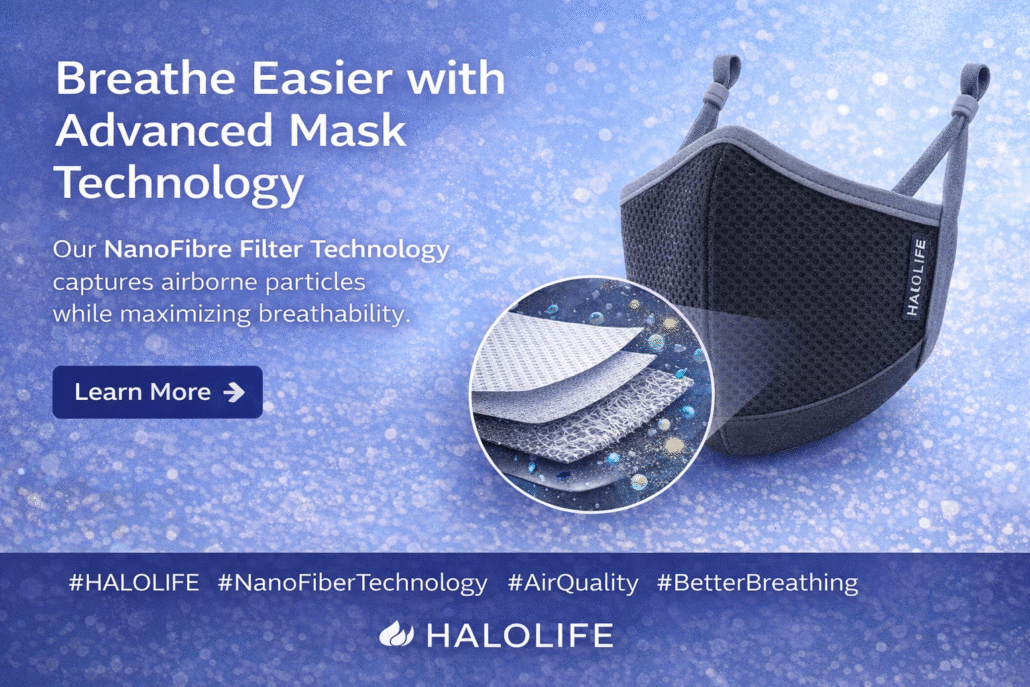
Why Nanofiber Masks Are the Future of Clean-Air Protection
Clean air is no longer something most people can take for granted. Rising pollution levels, recurring wildfire smoke, seasonal allergens, global travel, and increased awareness of airborne illness have changed how we think about respiratory health. In response, mask technology has evolved rapidly—moving beyond basic fabric coverings toward advanced filtration solutions. At the forefront of this evolution are nanofiber masks, widely regarded as the future of clean-air protection.
The Growing Need for Better Air Protection
Air quality challenges are becoming more frequent and more complex. Urban pollution, fine particulate matter (PM2.5), allergens, smoke, and airborne pathogens now affect daily life across many regions. Even indoor environments—homes, offices, schools, and transport hubs—can trap contaminants due to limited ventilation and recirculated air.
As awareness grows, so does the demand for protection that is effective, comfortable, and suitable for everyday use. People no longer want short-term or emergency solutions. They want long-term, wearable protection that integrates seamlessly into modern life.
What Makes Nanofiber Technology Different?
Traditional mask materials rely on relatively thick layers or electrostatic charge to trap particles. While effective to a degree, these approaches often compromise breathability, comfort, or long-term performance.
Nanofiber technology takes a different approach. Nanofibers are extremely thin—often hundreds of times thinner than a human hair—woven into dense, uniform filtration layers. This structure creates a highly efficient physical barrier that captures microscopic particles while allowing air to pass through more easily.
The result is a filter that can block very fine airborne particles without creating the heavy, stifling feel associated with older mask designs.
Superior Filtration Without Sacrificing Breathability
One of the biggest barriers to consistent mask use has always been comfort. Masks that are difficult to breathe through are quickly removed or worn incorrectly, reducing their effectiveness.
Nanofiber masks address this challenge directly. Their advanced structure allows for high filtration efficiency with minimal airflow resistance. This balance is critical for extended wear—whether during commutes, travel, workdays, or long periods of exposure to pollution or allergens.
Better breathability means people are more likely to wear masks consistently, which ultimately leads to better real-world protection.
Protection Against Modern Airborne Threats
Nanofiber masks are particularly effective against fine particulate matter such as PM2.5, which is associated with pollution, wildfire smoke, and certain industrial emissions. These particles are small enough to penetrate deep into the lungs and even enter the bloodstream, making them a serious health concern.
In addition to pollution, nanofiber filtration helps reduce exposure to allergens like pollen and dust, as well as airborne droplets that can carry viruses and bacteria. This makes nanofiber masks versatile tools for year-round respiratory protection, not just during peak pollution or illness seasons.
Designed for Everyday Life
The future of clean-air protection depends on usability. Masks must fit into daily routines without feeling intrusive or inconvenient. Nanofiber masks are typically lightweight, flexible, and designed with ergonomic fit in mind, making them suitable for a wide range of activities.
Reusable designs with replaceable filters also align with growing sustainability concerns. Rather than relying on disposable products, users can maintain consistent protection while reducing waste—an important consideration as mask use becomes more normalized.
Why Fit and Design Matter as Much as Filtration
Even the most advanced filter cannot perform well if a mask fits poorly. Gaps around the nose, cheeks, or chin allow unfiltered air to bypass the filter entirely.
Modern nanofiber masks emphasize thoughtful design features such as adjustable nose bridges, soft contact surfaces, and secure yet comfortable ear loops. These elements ensure that air passes through the filter rather than around it, maximizing protection without discomfort.
Good design also supports compliance. When a mask feels natural to wear, people are far more likely to use it when it matters.
A Shift From Reactive to Preventive Health
Historically, masks were viewed as reactive tools—used only during emergencies or illness outbreaks. Nanofiber masks represent a shift toward preventive respiratory health.
Just as people use sunscreen to prevent skin damage or seatbelts to reduce injury risk, wearing a high-performance mask in polluted or crowded environments is becoming a proactive health choice. This mindset reflects a broader understanding that clean air plays a critical role in long-term wellness.
Why Nanofiber Masks Represent the Future
The future of clean-air protection lies in solutions that combine science, comfort, and real-world practicality. Nanofiber masks meet these criteria by offering high filtration efficiency, excellent breathability, and designs suited for everyday life.
As environmental challenges continue to evolve, so must the tools we use to protect ourselves. Nanofiber technology provides a scalable, adaptable foundation for the next generation of respiratory protection—one that prioritizes both health and usability.
Breathing Smarter for What’s Ahead
Clean air is essential, not optional. As awareness grows and expectations rise, nanofiber masks are setting a new standard for what effective protection looks like.
By embracing advanced filtration technology, individuals and families can take control of their breathing health—today and into the future.