
Why Reusable Masks Are Better for the Planet
Environmental awareness has become part of everyday decision-making. From reducing plastic use to choosing reusable products, more people are looking for ways to lower their environmental footprint without sacrificing comfort or convenience. One area where small choices can make a meaningful difference is mask use.
While disposable masks may seem practical in the moment, their long-term environmental impact is significant. Reusable masks offer a more sustainable alternative — one that supports both personal wellbeing and the health of the planet.
The Environmental Cost of Disposable Masks
Disposable masks are designed for single or short-term use, which means they quickly become waste. Made primarily from synthetic plastics, these masks do not biodegrade easily and often end up in landfills, waterways, or natural environments.
Since their widespread adoption, billions of disposable masks have been discarded worldwide. Many break down into microplastics, contributing to pollution that affects ecosystems, wildlife, and water quality.
What’s more, the energy and resources required to manufacture, package, and transport disposable masks add to their overall environmental footprint. When used daily, the impact multiplies rapidly.
Reusable Masks Reduce Waste at the Source
Reusable masks address this issue at its core: less waste from the start. By choosing a mask designed for repeated use, one product replaces dozens — or even hundreds — of disposables over its lifetime.
With proper care, a high-quality reusable mask can be worn again and again, significantly reducing the volume of waste generated. For individuals, families, and organisations, this shift can make a noticeable difference over time.
Reducing waste doesn’t require radical lifestyle changes. It often begins with choosing products that are built to last.
Sustainability Without Sacrificing Performance
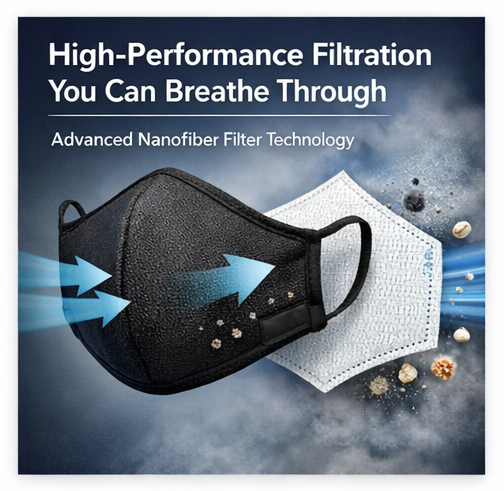
A common misconception is that reusable options are less effective or less comfortable. In reality, modern reusable masks — especially those designed with advanced filtration technologies — are engineered to balance protection, breathability, and durability.
Instead of relying on thick layers that restrict airflow, innovative materials such as nanofiber filtration focus on efficiency and comfort. This allows reusable masks to perform well while remaining suitable for daily wear.
Sustainability works best when it fits seamlessly into real life. Products that are comfortable, breathable, and reliable are far more likely to be used consistently.
Lower Carbon Footprint Over Time
The environmental impact of a product isn’t just about what it’s made from — it’s also about how often it needs to be replaced.
Disposable masks require continuous production and transportation. Reusable masks, on the other hand, are manufactured once and used repeatedly. Over time, this leads to:
- Fewer raw materials consumed
- Reduced manufacturing emissions
- Less packaging waste
- Lower transport-related carbon output
When evaluated across weeks or months of use, reusable masks clearly offer a smaller environmental footprint.
A Practical Choice for Everyday Life
Sustainability isn’t only about environmental benefits — it’s also about practicality. Reusable masks tend to be more cost-effective over time, eliminating the need for frequent repurchasing.
They’re also easier to integrate into daily routines. With simple washing and air-drying, reusable masks can remain fresh and ready for use without contributing to unnecessary waste.
For households with multiple members, reusable options provide both economic and environmental advantages.
Supporting a Circular Mindset
Reusable products align with a broader shift toward a circular economy, where items are designed to be used longer, cared for properly, and replaced less often.
This mindset encourages:
- Thoughtful consumption
- Reduced reliance on single-use plastics
- Greater awareness of product life cycles
By choosing reusable masks, individuals participate in a system that values longevity over disposability — a small but meaningful step toward more responsible consumption.
Cleaner Choices for a Cleaner Future
Environmental challenges can feel overwhelming, but progress often comes from collective small actions. Choosing reusable masks may seem like a minor change, yet multiplied across millions of people, the impact is substantial.
Reusable masks help reduce waste, conserve resources, and limit pollution — all while supporting everyday needs for comfort and breathability.
Making Sustainability a Habit
The most effective sustainable choices are the ones people can maintain long term. Reusable masks make it easier to build environmentally responsible habits without inconvenience or compromise.
By choosing products designed for reuse, durability, and comfort, consumers contribute to a future where protection doesn’t come at the planet’s expense.
A Better Choice for People and the Planet
Reusable masks represent a practical balance between environmental responsibility and everyday functionality. They reduce waste, lower carbon impact, and support sustainable habits — all while fitting naturally into modern life.
At HALOLIFE, sustainability is part of thoughtful design. Creating products that last longer, perform better, and generate less waste helps support both personal wellbeing and the world we share.
Choosing reusable isn’t just a trend — it’s a step toward a cleaner, more responsible future.