Protect Little Lungs from Big Air Pollution Risks
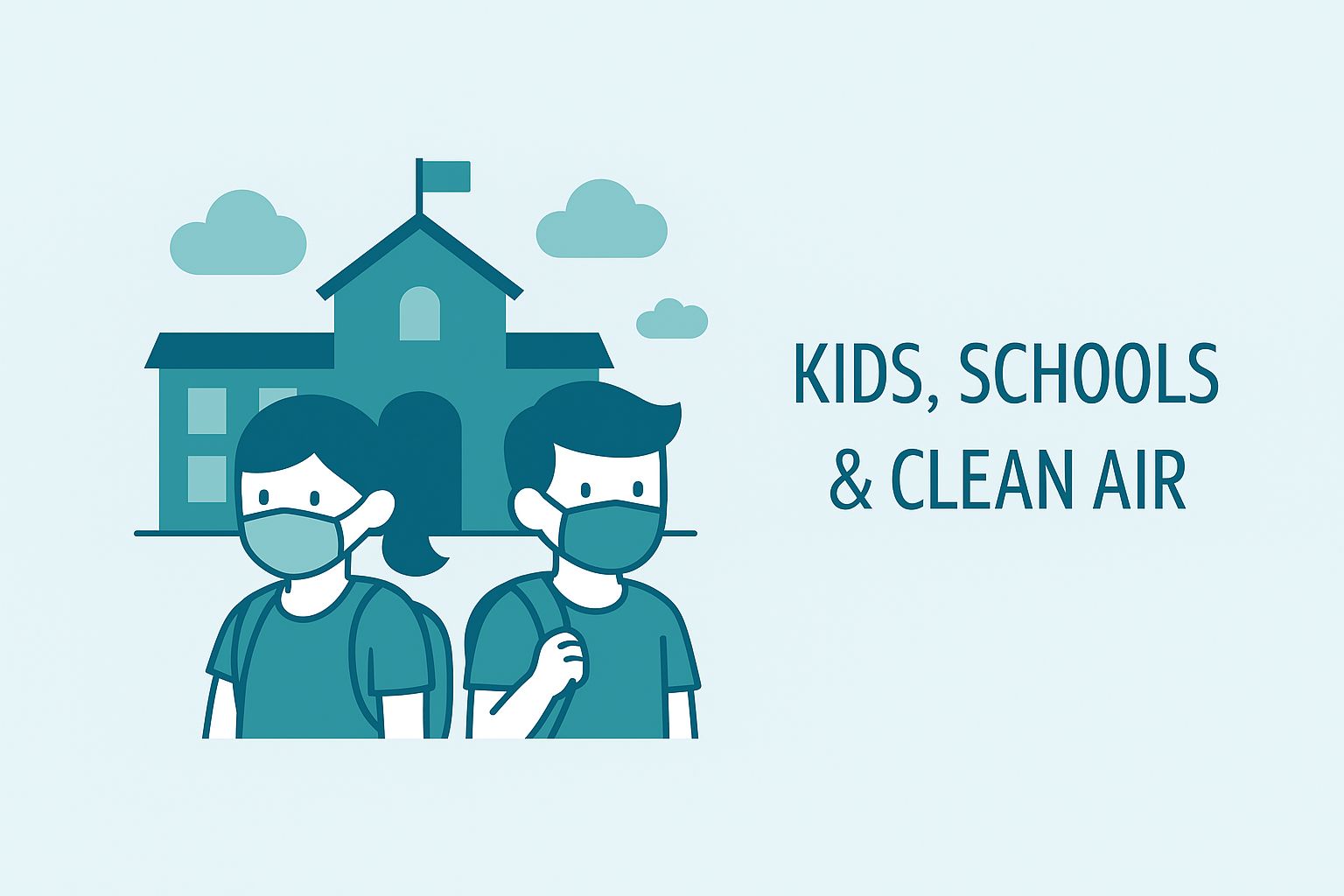
Children’s lungs are still growing—and that makes them especially vulnerable to air pollution. Whether it’s wildfire smoke, PM2.5 particles, traffic pollution, or seasonal air quality alerts, young lungs can be affected more quickly than those of healthy adults. As wildfire seasons become longer across the United States and air quality concerns continue to make headlines, protecting children from harmful airborne particles has never been more important.
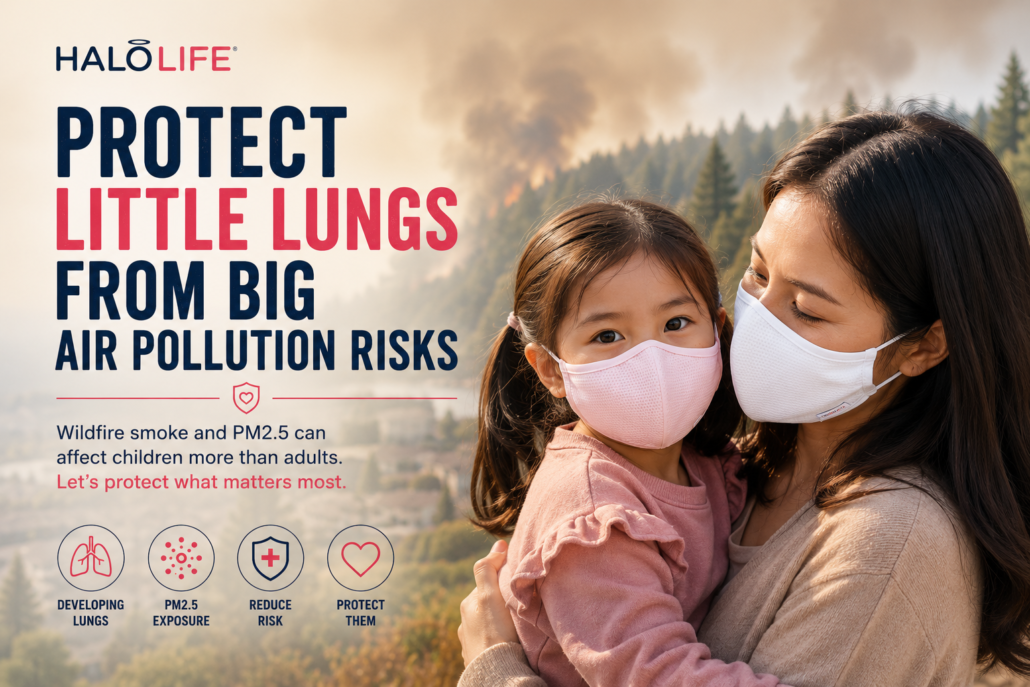
While families cannot always avoid poor air quality, understanding the risks and taking practical precautions can help reduce exposure and support healthier breathing every day.
Why Children Are More Vulnerable to Air Pollution
Children are not simply smaller adults. Their respiratory systems are still developing, and they breathe more rapidly than adults. This means they inhale more air—and potentially more pollutants—relative to their body weight.
Fine particulate matter known as PM2.5 is one of the biggest concerns. These microscopic particles are produced by wildfire smoke, vehicle emissions, industrial pollution, and other combustion sources. Because PM2.5 particles are so small, they can travel deep into the lungs and may even enter the bloodstream.
Young lungs are more sensitive to irritation caused by these particles, making children more susceptible to coughing, wheezing, throat irritation, and worsening asthma symptoms during periods of poor air quality.
Wildfire Smoke Is Affecting More Families
Wildfire smoke is no longer only a concern for communities close to active fires. Smoke can travel hundreds or even thousands of miles, affecting cities and suburbs far away from the original wildfire.
Many American families have experienced hazy skies, unhealthy Air Quality Index (AQI) readings, and public health advisories—even when no fires are burning nearby.
For children, these smoke events can interfere with outdoor activities, sports, school events, and everyday play. Parents often find themselves asking whether it’s safe to spend time outside or whether extra precautions should be taken.
Common Symptoms of Smoke Exposure in Children
During periods of poor air quality, children may experience:
- Persistent coughing
- Sore throat
- Eye irritation
- Shortness of breath
- Wheezing
- Fatigue
- Headaches
- Increased asthma or allergy symptoms
If symptoms become severe or breathing becomes difficult, medical attention should always be sought promptly.
Everyday Air Pollution Matters Too
Wildfire smoke receives significant attention, but children are exposed to many other sources of airborne pollution throughout the year.
Daily exposure may come from:
- Heavy traffic
- Construction dust
- Industrial emissions
- Seasonal pollen
- Dust storms
- Outdoor recreational activities during poor AQI days
Even when the sky appears clear, harmful particles may still be present in the air.
That’s why paying attention to local air quality reports can become part of a healthy family routine.
Simple Ways to Help Protect Growing Lungs
Protecting children doesn’t have to be complicated. Small everyday habits can significantly reduce unnecessary exposure.
Monitor local air quality before outdoor activities, especially during wildfire season.
Keep windows closed when outdoor air quality is poor and use indoor air filtration whenever possible.
Limit strenuous outdoor exercise during unhealthy AQI conditions.
Choose parks or walking areas away from busy roads whenever practical.
Encourage children to stay hydrated, as healthy airways can better manage irritation.
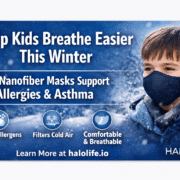
When outdoor exposure cannot be avoided, many families also consider using high-quality filtered face masks designed to help reduce exposure to airborne particles during smoke events and periods of poor air quality.
Why Filtered Breathing Is Becoming Part of Family Wellness
As air quality challenges continue across many regions of the United States, filtered breathing is becoming part of everyday wellness for many families.
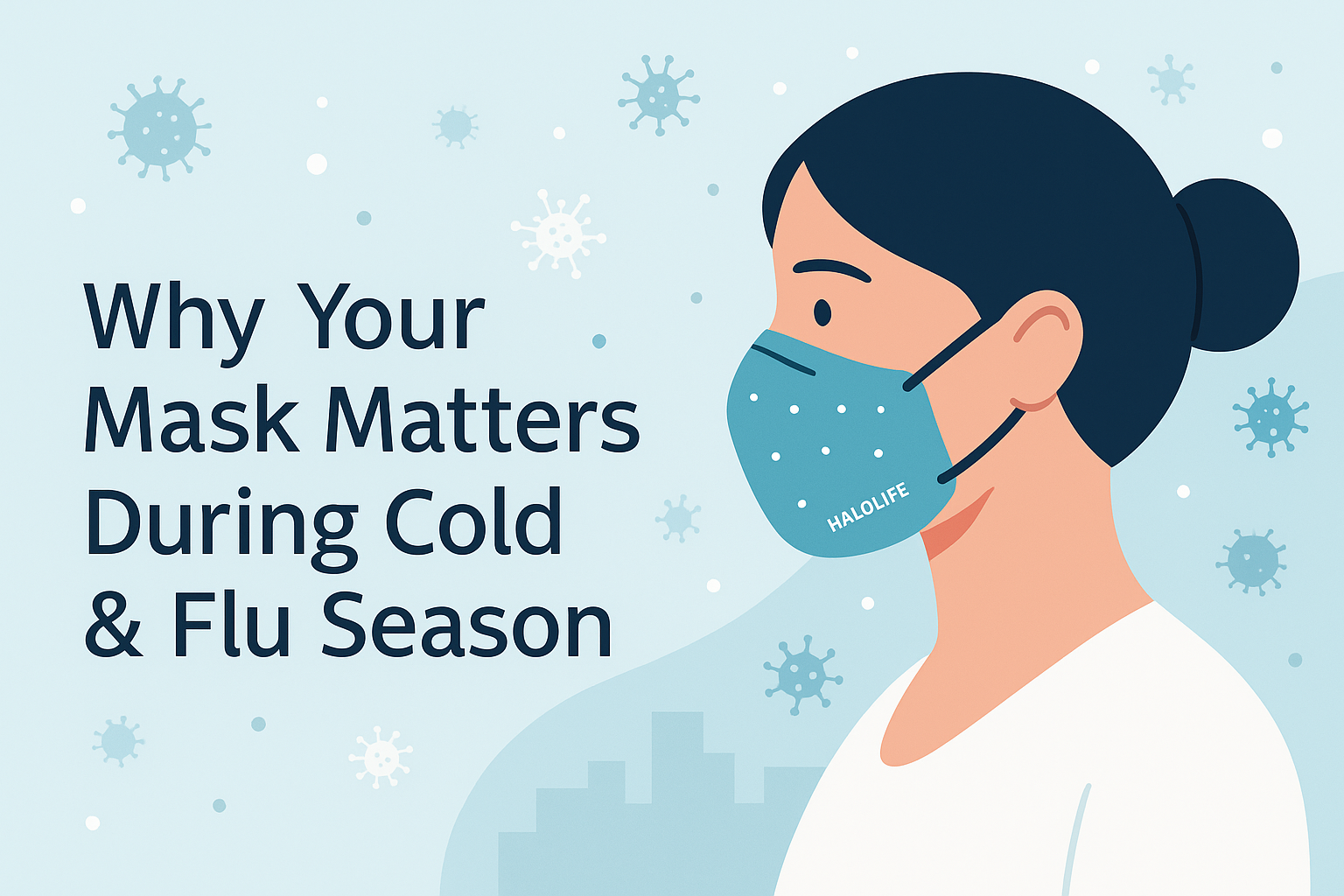
Reusable masks featuring advanced filtration technology may help reduce exposure to airborne particles while remaining comfortable for commuting, travel, outdoor activities, and wildfire smoke events.
HALOLIFE masks are designed with Halo NanoFilter™ Technology to support filtered breathing while offering a lightweight, reusable design suitable for everyday use. They are intended to help reduce exposure to airborne particles during periods of poor air quality while providing comfort that families can wear throughout the day.
Small Steps Today Support Healthier Tomorrows
Children deserve every opportunity to grow, learn, and play while breathing cleaner air.
Although we cannot control wildfire seasons or changing environmental conditions, we can make informed choices that help reduce unnecessary exposure to harmful airborne particles.
By staying informed about air quality, planning outdoor activities wisely, and considering practical protective measures during smoke events, families can help support healthier breathing for the people who matter most.
Because protecting little lungs today helps build healthier tomorrows.
FAQs
Why are children more affected by wildfire smoke?
Children breathe faster than adults, their lungs are still developing, and they inhale more air relative to their body size, making them more vulnerable to PM2.5 particles and smoke.
What is PM2.5?
PM2.5 refers to tiny airborne particles measuring 2.5 micrometres or smaller. These particles can travel deep into the lungs and may affect respiratory health.
Should children play outside during poor air quality?
When AQI levels are unhealthy, it is generally recommended to reduce prolonged outdoor activity, particularly vigorous exercise.
How can families reduce exposure to air pollution?
Checking daily air quality reports, staying indoors during smoke events, using air filtration, and reducing outdoor exposure during poor AQI days are effective ways to help lower exposure.
Can filtered masks help during wildfire smoke?
High-quality masks with advanced filtration technology may help reduce exposure to airborne particles such as PM2.5 during wildfire smoke and poor air quality events.