Protecting Kids from Summer Smoke: A Parent’s Essential Guide
Summer is supposed to be the season of unbridled freedom. It’s a time for neighborhood bike rides, melting ice cream cones, pool splashes, and campfires under the stars. But over the last few years, a quiet, hazy intruder has begun rewriting our family summer traditions: wildfire smoke.
As a parent, few things are harder than looking out the window at a bright summer day, seeing a dull orange sun filtered through a thick blanket of smog, and telling your kids they can’t go outside to play. It feels unfair. Even worse, it brings a heavy dose of parental anxiety.
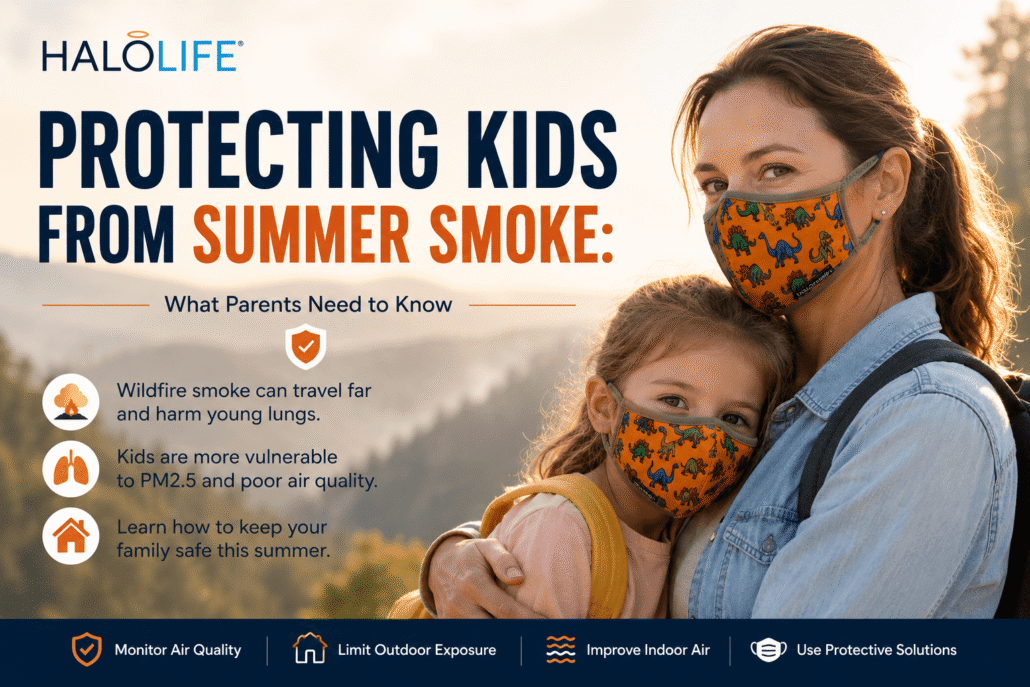
When the air quality index (AQI) spikes, it isn’t just an inconvenience—it is a direct threat to our children’s developing bodies. Here is what you need to know about protecting your kids from summer smoke, why they are more vulnerable than adults, and the concrete steps you can take to keep them safe.
Why Summer Smoke Hits Kids Harder
It’s easy to assume that if a smoky day feels tolerable to you, it’s fine for your little ones. Unfortunately, biology says otherwise. Children are not just “miniature adults” when it comes to air pollution; their bodies are uniquely vulnerable to poor air quality for several reasons:
-
They Breathe Faster: Kids have higher metabolic rates and breathe more rapidly than adults. Pound for pound, a child inhales significantly more air—and therefore more toxic air pollution—than an adult in the same environment.
-
Developing Lungs: A child’s lungs are still growing and maturing well into their teenage years. Exposure to heavy smoke can permanently alter lung development and decrease overall lung function later in life.
-
Narrow Airways: Because a child’s airways are smaller, even minor irritation or inflammation caused by smoke can trigger breathing issues like wheezing, coughing, or asthma flare-ups much faster than in an adult.
-
Play Behavior: Kids are naturally more physically active outdoors. Heavy breathing during running and playing forces smoke deeper into their lungs.
The Invisible Threat: PM2.5 Particles
The primary culprit in wildfire smoke is PM2.5—fine particulate matter that is less than 2.5 microns in diameter (about 30 times smaller than a single human hair).
When inhaled, these microscopic particles bypass the body’s natural defenses in the nose and throat. They travel deep into the lungs and can even cross directly into the bloodstream, triggering systemic inflammation, headaches, fatigue, and respiratory distress.
How to Protect Your Children This Summer
While you can’t control the outdoor air quality, you can control your child’s exposure. Keep this safety checklist handy when the smoke rolling in:
1. Monitor the Air Quality Daily
Don’t rely on a simple visual check. Check a reliable local tracking tool like AirNow.gov to monitor the AQI in your neighborhood.
-
AQI 0-50 (Good): Great time for outdoor activities.
-
AQI 101-150 (Unhealthy for Sensitive Groups): Cut back on prolonged or heavy outdoor play. Kids with asthma should stay indoors.
-
AQI 151+ (Unhealthy for All): Keep all children indoors and move activities inside.
2. Create a “Clean Air Clean Room” Indoors
When smoke levels are dangerous, your home should be a sanctuary. Keep windows and doors tightly shut. Set your air conditioner or HVAC system to “recirculate” so it doesn’t pull smoky air inside. If possible, run a high-quality HEPA air purifier in the room where your children spend the most time, especially their bedrooms at night.
3. Equip Them with True Nanofiber Protection
There will be times when your family must step outside—whether it’s for a doctor’s appointment, travel, or a mandatory walk to the car. Standard cloth masks or loose surgical masks do almost nothing to block microscopic PM2.5 smoke particles.
To keep your child safe, they need a mask engineered specifically to filter out fine particulates, while remaining comfortable enough that they won’t pull it off.
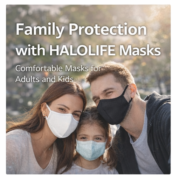
This is exactly why we designed the Kids’ HALOmask. Powered by advanced New Zealand nanofiber technology, our masks are laboratory-tested to capture over 99% of airborne particulates down to 0.1 microns—easily trapping dangerous PM2.5 smoke.
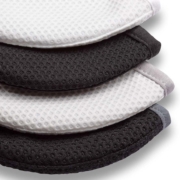
Because we know kids won’t wear uncomfortable gear, HALOmask features an ultra-breathable design, soft moisture-wicking bamboo lining, and adjustable ear loops. It provides a tight, gap-free seal on smaller faces without making them feel suffocated.
Reclaiming Summer Safely
We shouldn’t have to keep our kids locked inside all summer, but we do have to adapt to our changing environments. By staying informed, keeping indoor air clean, and using advanced nanofiber protection when stepping outside, you can protect your child’s lungs and preserve your peace of mind all season long.
Explore our collection of [Kids’ HALOmasks] today to find the perfect blend of defense, style, and breathable comfort for your family.
Frequently Asked Questions (FAQs)
Q: Can I just use a standard cloth mask to protect my child from wildfire smoke?
A: No. Standard cloth and surgical masks are designed to catch large droplets, not microscopic particles. Wildfire smoke is made of ultra-fine PM2.5 particles that pass right through regular fabric weave. Your child needs a dedicated mask with nanofiber or HEPA-grade filtration to block smoke safely.
Q: What are the early signs that smoke is affecting my child’s health?
A: Watch out for burning or watery eyes, a persistent cough, wheezing, throat irritation, unusual fatigue, or headaches. If your child has asthma, a smoke event can trigger sudden and severe attacks, so keep rescue inhalers close at hand.
Q: How long can my child safely wear a HALOmask during smoke season?
A: HALOmask is designed for long-wear comfort with its lightweight airflow and bamboo lining. Our replaceable nanofiber filters are highly durable and offer up to 200 hours of active, premium protection before needing a swap.
Q: Is it safe for my kids to exercise or play sports outside when it’s smoky?
A: If the AQI rises above 100, it is highly recommended to move high-intensity sports and strenuous exercise indoors. Heavy breathing during exercise causes children to inhale significantly more microscopic soot deeper into their lungs, compounding the respiratory risks.