Essential Safety Tips for Major Natural Disasters
Natural disasters—whether earthquakes, floods, hurricanes, or severe storms—can strike with little warning. In an era of increasing environmental volatility, being “prepared” has evolved from a recommendation to a survival necessity. Understanding the specific mechanics of safety for each major disaster type is the first step toward resilience.
Earthquakes: Drop, Cover, and Hold On
Unlike weather events that can be tracked, earthquakes provide zero lead time.
-
The Golden Rule: Drop to your hands and knees. Cover your head and neck under a sturdy table or desk. Hold On to your shelter until the shaking stops.
-
Indoor Safety: Stay away from glass, windows, outside doors, and walls. Do not attempt to run outside during the shaking; most injuries occur when people try to move locations.
-
Post-Quake: Be mindful of aftershocks and check gas lines for leaks before using any open flames.
Flooding: Turn Around, Don’t Drown
Flooding is the most frequent and costly natural disaster in the United States.
-
Flash Flood Awareness: If there is any possibility of a flash flood, move to higher ground immediately. Do not wait for instructions.
-
Vehicle Safety: Never drive through flooded roads. Just six inches of moving water can knock you off your feet, and two feet of water can sweep away most vehicles, including SUVs.
-
Evacuation: If told to evacuate, do so immediately. Disconnect electrical appliances to prevent electrical shock when water enters the home.
Hurricanes and High Winds
Hurricanes bring a triple threat: wind, rain, and storm surge.
-
Secure the Perimeter: Board up windows with 5/8″ exterior grade plywood or install permanent storm shutters. Secure outdoor furniture that could become a projectile.
-
The Safe Room: Identify an internal room without windows on the lowest floor.
-
Flood Risk: Even if you aren’t on the coast, hurricanes cause inland flooding. Keep your “Go-Bag” in a waterproof container.
The Universal Disaster Kit (The “Go-Bag”)
Regardless of the disaster, your emergency kit should be packed and accessible:
-
Hydration: One gallon of water per person per day for at least three days.
-
Nutrition: Three-day supply of non-perishable, high-calorie food.
-
Power: Battery-powered or hand-crank radio and extra batteries.
-
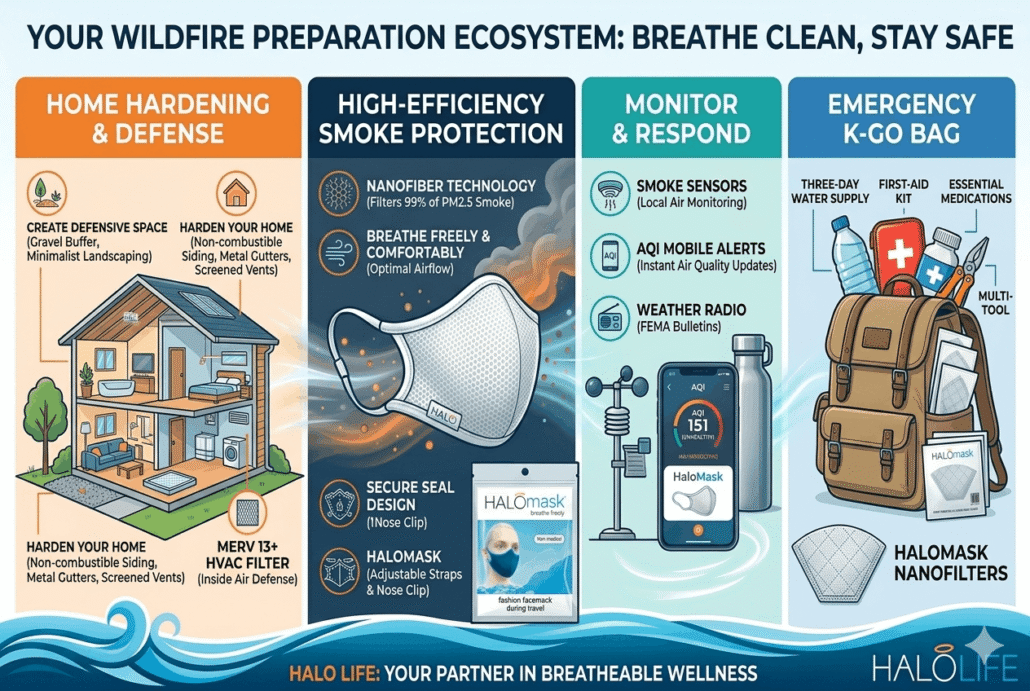
Respiratory Protection: Disasters often kick up dust, ash, or mold. A high-quality nanofiber mask, like the HaloMask, is essential for filtering out dangerous airborne particulates during and after the event.
FAQs
Q: Should I open windows during a hurricane to “equalize pressure”?
A: No. This is a common myth. Opening windows allows high-speed wind to enter the home, which can actually increase the risk of your roof being blown off. Keep all windows and doors tightly shut.
Q: How long should I stay in my safe spot after an earthquake?
A: Stay put for several minutes after the initial shaking stops. Aftershocks are common and can be strong enough to collapse structures already weakened by the main quake.
Q: What is the most important item in a disaster kit?
A: Communication. A way to receive emergency alerts (like a NOAA weather radio) is vital, followed closely by clean water and respiratory protection to ensure you can move through debris or smoke safely.
Q: Where is the safest place to be during a tornado?
A: A basement or a storm cellar. If those aren’t available, an inner room on the lowest floor (like a bathroom or closet) away from windows and corners is the best alternative.