Allergy Season Survival Guide: How to Breathe Easy When Pollen Is Everywhere
For millions of people, the arrival of spring and summer brings a familiar sense of dread. Trees, grasses, and weeds begin their annual reproductive cycles, releasing billions of microscopic pollen grains into the air. What follows is a predictable cycle of sneezing, itchy eyes, nasal congestion, and fatigue.
While seasonal allergies—often called hay fever or allergic rhinitis—are common, they don’t have to control your life. Surviving allergy season requires a shift from reactive treatments to proactive, preventative strategies. This survival guide outlines actionable steps to minimize exposure, protect your respiratory system, and regain control over your daily wellness.
1. Track the Daily Pollen Counts
The first rule of allergy survival is knowing what you are up against. Pollen levels fluctuate significantly based on the time of day, temperature, and weather patterns.
-
Peak Times: Pollen counts are typically highest in the early morning hours (between 5:00 AM and 10:00 AM) and on warm, dry, windy days.
-
Rainy Days: A heavy rainfall can temporarily wash pollen out of the air, making the hours immediately following a storm an excellent time to head outside.
-
Monitoring: Use localized tracking tools like AAAAI’s National Allergy Bureau or reliable weather apps to check the daily counts. If the levels are high, plan your outdoor activities for the late afternoon or evening.
2. Fortify Your Indoor Air Sanctuary
When pollen is everywhere, your home should be a safe zone where your immune system can rest and recover. To keep the outdoor air from penetrating your indoor living space, implement these habits:
-
Seal Your Windows: It can be tempting to let in a fresh breeze, but open windows act as an invitation for pollen to settle onto your carpets, bedding, and furniture. Rely on air conditioning instead.
-
Upgrade Your HVAC Filtration: Make sure your home’s HVAC system is equipped with a high-efficiency media filter rated MERV 13 or higher, which is capable of trapping microscopic allergens.
-
Deploy HEPA Purifiers: Place portable True HEPA air purifiers in high-traffic rooms, especially your bedroom. Because you spend roughly a third of your day sleeping, keeping your bedroom air clean reduces nighttime congestion and improves sleep quality.
3. Practice Strict Post-Outdoor Hygiene
Pollen is incredibly sticky. When you walk outside, it hitches a ride on your clothes, hair, skin, and even your pets. To prevent tracking it throughout your home:
-
The Mudroom Routine: Strip off your outdoor layers as soon as you walk through the front door. Keep outdoor shoes away from your main living areas.
-
Nightly Showers: Shower and wash your hair before going to bed. This prevents you from transferring accumulated pollen onto your pillowcase, where you would breathe it in all night.
-
Wipe Down Pets: If you have dogs or cats that go outside, wipe down their fur with a damp towel when they return indoors to remove trapped allergens.
4. Deploy High-Tech Personal Protective Equipment (PPE)
There are times when staying indoors isn’t an option. Whether you are commuting, running errands, or simply trying to enjoy your yard, you need a physical barrier to block allergens from entering your respiratory tract.
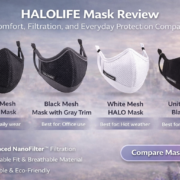
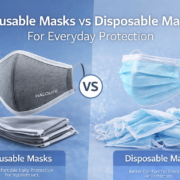
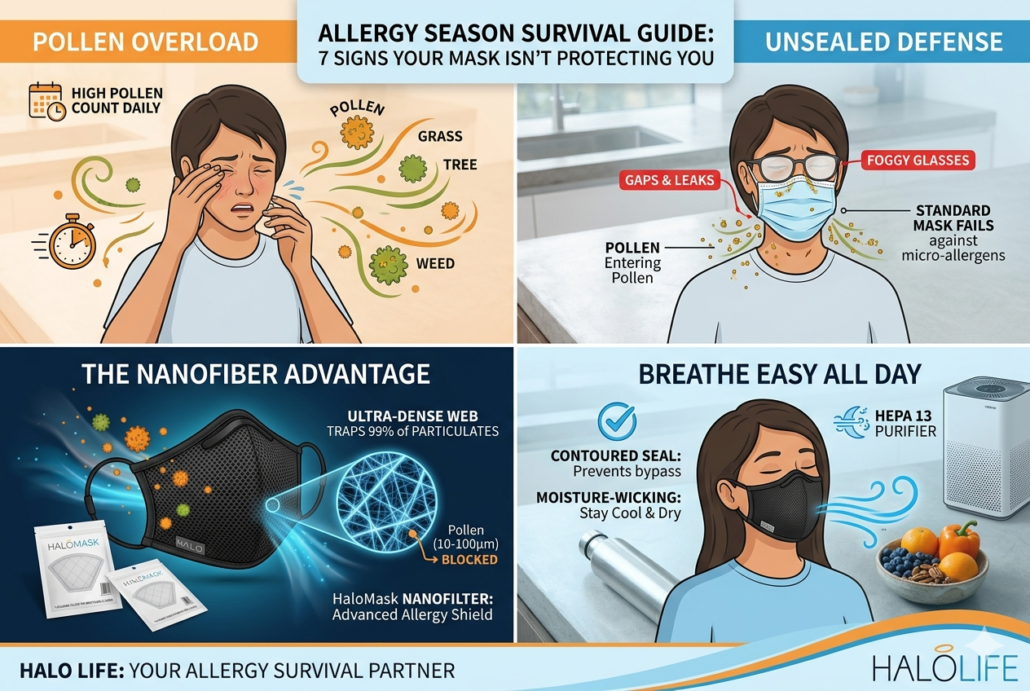
Standard cloth face coverings or loose-fitting surgical masks are generally ineffective against fine allergens. This is where premium respiratory tech changes the game. The HaloMask, engineered by HALOLABS, utilizes advanced nanofiber technology to filter out 99% of airborne particulates—including pollen, mold spores, dust, and dander.
Because nanofiber material features an incredibly dense, microscopic web, it halts particles at the surface while allowing for exceptional airflow. Combined with an adjustable nose clip and contoured seal, it prevents the bypass leaks that make traditional masks ineffective for allergy sufferers.
5. Cleanse Your Sinuses and Support Your Body
In addition to keeping pollen out, you can support your body’s natural defenses from the inside out:
-
Saline Rinses: Use a neti pot or saline spray to gently flush out your nasal passages after being outdoors. This physically removes trapped pollen grains and thins out mucus.
-
Anti-Inflammatory Nutrition: Incorporate foods rich in natural antihistamines and antioxidants into your diet, such as citrus fruits, berries, leafy greens, and omega-3 fatty acids.
-
Stay Hydrated: Drinking plenty of water keeps your mucous membranes moist, helping them function effectively as your body’s primary defense system.
FAQS
Q: Can a mask really prevent seasonal allergy symptoms?
A: Yes. Seasonal allergies are triggered by a physical particle (pollen) entering your respiratory system. Wearing a high-efficiency nanofiber mask like the HaloMask creates a physical barrier that stops pollen before it reaches your nasal passages and lungs, significantly reducing or eliminating symptoms while worn.
Q: Is pollen smaller than wildfire smoke particles?
A: No. Most pollen grains range from 10 to 100 micrometers in size, whereas wildfire smoke particles (PM2.5) are 2.5 micrometers or smaller. Because pollen particles are larger, a mask that is rated to filter 99% of PM2.5 smoke particles will easily trap 100% of seasonal pollen.
Q: How often should I wash my mask during allergy season?
A: If you are wearing a reusable mask like the HaloMask, you can hand-wash the outer fabric shell regularly to remove accumulated grime and pollen. However, remember to remove the replaceable nanofilter before washing, as moisture can degrade the filter media.
Q: Why do my allergy symptoms feel worse at night?
A: Gravity plays a role; when you lie down, nasal congestion naturally increases. Additionally, if you do not shower before bed or if you sleep with the windows open, you are likely breathing in pollen that has accumulated on your bedding or skin throughout the day.