Wildfire Smoke Is More Dangerous Than You Think: The Hidden Health Risks of PM2.5
When a wildfire burns, most people focus on the flames. But the greatest danger often comes from something you can’t easily see—the microscopic particles suspended in the smoke.
Wildfire smoke contains PM2.5, a form of fine particulate matter that is small enough to travel deep into your lungs and, in some cases, enter your bloodstream. These particles can affect people hundreds of miles away from the nearest fire, making wildfire smoke a serious public health concern across the United States.
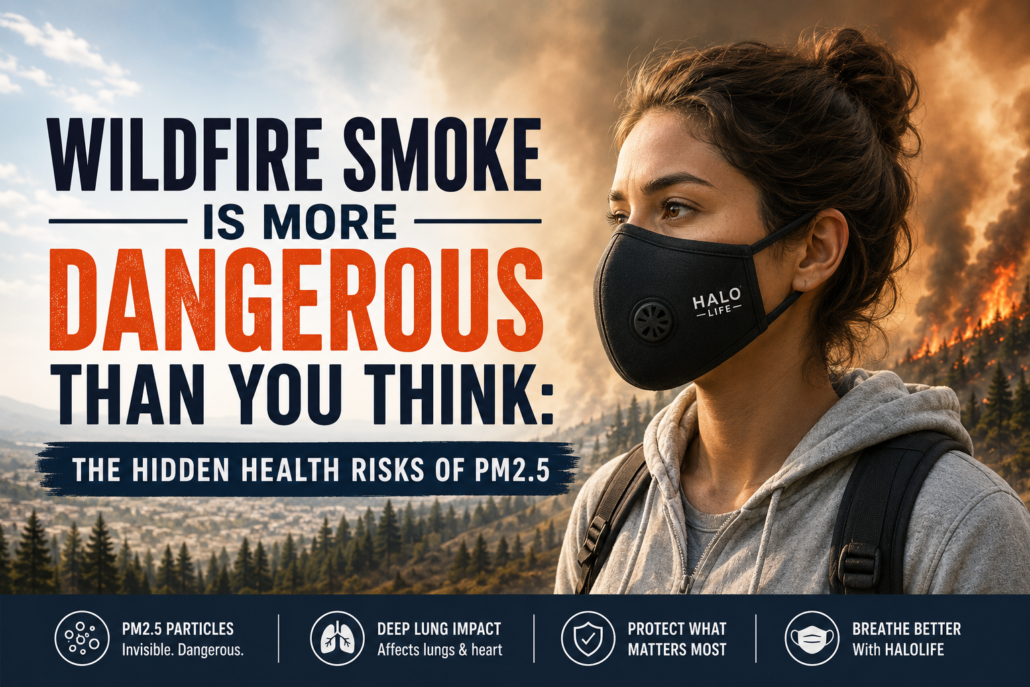
As wildfire seasons become longer and more intense, understanding the hidden health risks of PM2.5 is one of the most important steps you can take to protect yourself and your family.
What Is PM2.5?
PM2.5 refers to airborne particles that are 2.5 micrometers or smaller in diameter. To put that into perspective, PM2.5 particles are about 30 times smaller than the width of a human hair.
Because of their tiny size, these particles can bypass many of your body’s natural defenses. Instead of being trapped in your nose or throat, they can travel deep into the lungs and potentially enter the bloodstream.
Wildfire smoke is one of the largest sources of PM2.5 pollution, but these particles are also produced by:
- Vehicle exhaust
- Industrial emissions
- Wood-burning stoves
- Construction dust
- Cooking smoke
- Tobacco smoke
Why Wildfire Smoke Is More Dangerous Than It Appears
Many people assume they are safe if the smoke is no longer visible. Unfortunately, that is not always true.
PM2.5 particles can remain suspended in the air long after visible smoke has disappeared. Wind can carry wildfire smoke across entire regions, affecting air quality far from the original fire.
This means you may be breathing unhealthy air even when the sky appears clear.
Checking the Air Quality Index (AQI) is far more reliable than relying on visual conditions alone.
How PM2.5 Affects Your Health
Respiratory Problems
Wildfire smoke can irritate the respiratory system almost immediately.
Common symptoms include:
- Persistent coughing
- Sore throat
- Wheezing
- Chest tightness
- Shortness of breath
People with asthma, allergies, COPD, or other respiratory conditions are often especially sensitive to smoke exposure.
Cardiovascular Effects
PM2.5 does not only affect the lungs.
Research has linked long-term exposure to fine particulate matter with increased inflammation and additional stress on the heart and blood vessels. Individuals with heart disease or high blood pressure may be particularly vulnerable during periods of poor air quality.
Children and Older Adults
Children breathe more air relative to their body weight than adults, making them especially susceptible to airborne pollutants.
Older adults and people with chronic medical conditions are also more likely to experience health effects from wildfire smoke exposure.
How Far Can Wildfire Smoke Travel?
One of the most surprising facts about wildfire smoke is how far it can travel.
Smoke from large wildfires can move hundreds or even thousands of miles, affecting communities that are nowhere near active fires.
This is why air quality alerts are often issued across multiple states during major wildfire events.
Even if you cannot smell smoke, elevated PM2.5 levels may still be present.
Signs You May Be Exposed
Wildfire smoke exposure is not always obvious.
Watch for symptoms such as:
- Burning or watery eyes
- Persistent cough
- Fatigue
- Headaches
- Difficulty breathing
- Increased asthma symptoms
If air quality is poor in your area, reducing exposure is often the most effective immediate step.
How to Protect Yourself During Wildfire Season
Monitor Air Quality
Check your local AQI before spending extended time outdoors.
When PM2.5 levels rise, limit outdoor activities, especially strenuous exercise.
Keep Indoor Air Cleaner
Close windows and doors during smoke events.
Using a HEPA air purifier can help reduce indoor airborne particles.
Avoid activities that create additional indoor pollution, such as burning candles or smoking indoors during wildfire smoke events.
Wear Effective Respiratory Protection
Not all masks provide meaningful protection against PM2.5.
Loose-fitting cloth masks may help reduce larger droplets but generally are not designed to filter microscopic wildfire smoke particles effectively.
HALOLIFE masks featuring HALO Nanofilter™ Technology are designed to help filter ultrafine airborne particles while remaining lightweight, breathable, and comfortable for everyday wear.
Whether you are commuting, traveling, working outdoors, or experiencing wildfire smoke in your community, choosing high-quality filtration can help reduce exposure to harmful airborne pollutants.
Reduce Outdoor Exposure
During heavy smoke events:
- Stay indoors whenever possible
- Postpone outdoor exercise
- Keep car windows closed
- Use recirculated air settings in vehicles
- Wear effective respiratory protection if you must go outside
Why Comfort Matters
A mask is only effective if people are willing to wear it consistently.
Many individuals remove uncomfortable masks after only a short period of time, reducing their level of protection.
HALOLIFE combines advanced filtration with breathable materials, adjustable fit, and reusable design to help support longer, more comfortable wear during wildfire smoke events.
Every Breath Matters
Wildfire smoke does not need to be visible to be harmful.
PM2.5 particles can remain in the air long after smoke appears to clear, continuing to affect respiratory and cardiovascular health.
By monitoring air quality, reducing exposure, improving indoor air, and wearing effective respiratory protection when needed, you can take meaningful steps to protect yourself and your family during wildfire season.
At HALOLIFE, our mission is simple: help people breathe cleaner, healthier air through innovative filtration technology designed for everyday life.
Because every breath matters.
FAQs
What makes wildfire smoke dangerous?
Wildfire smoke contains PM2.5 particles, which are microscopic particles small enough to travel deep into the lungs and potentially enter the bloodstream.
Can wildfire smoke affect me even if the sky looks clear?
Yes. PM2.5 particles can remain suspended in the air long after visible smoke has disappeared, so air quality may still be unhealthy even on clear-looking days.
What are the symptoms of wildfire smoke exposure?
Common symptoms include coughing, sore throat, wheezing, burning eyes, headaches, chest tightness, and difficulty breathing.
Who is most vulnerable to wildfire smoke?
Children, older adults, pregnant women, and people with asthma, COPD, heart disease, or other chronic medical conditions are generally more susceptible.
How can I protect myself from wildfire smoke?
Check local AQI reports, stay indoors during smoke events, improve indoor air filtration, and wear a high-quality mask designed to help filter fine airborne particles.
Why choose HALOLIFE during wildfire season?
HALOLIFE masks feature HALO Nanofilter™ Technology, designed to help filter ultrafine airborne particles while providing breathable comfort, adjustable fit, and reusable everyday protection.